Playing with Bo

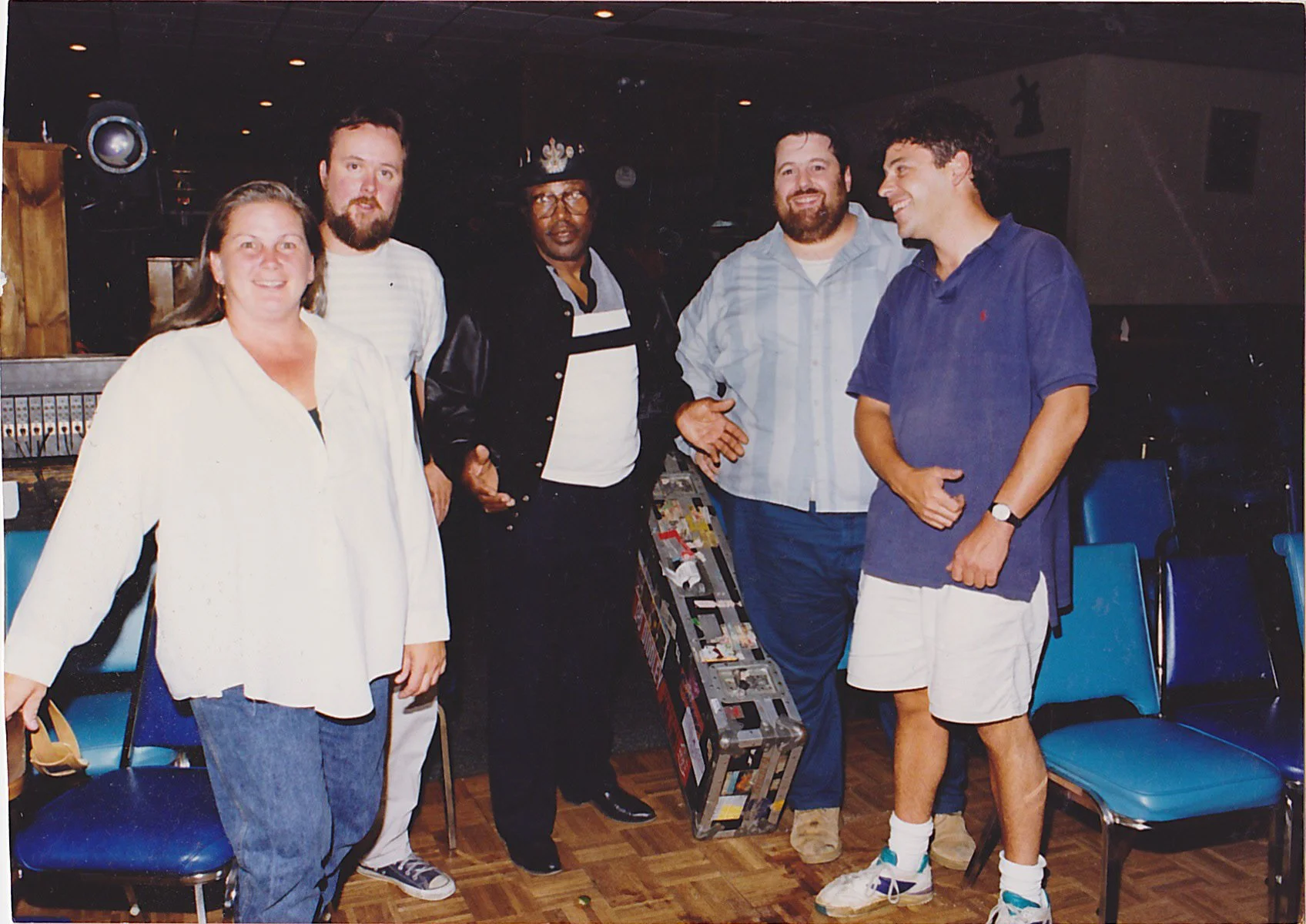
This year marks 50 years that I have been playing gigs. The only pause during those 50 years happened when I had to stop for about a year when I had my cancer surgery. Over the years I have had the pleasure of playing with some great musicians. The most famous of these was Rock ’n Roll Hall of Famer, the one and only, Bo Diddley.

In 1992, Rock 101 in Manchester had a contest - “Bo Needs a Band”. Bo Diddley was coming to Manchester and he needed a back-up band. There were 2 rounds of auditions followed by the finals and my band Lichen won! We were thrilled and then in a classic local band hard luck story, the club where the concert was scheduled was padlocked shut by the city for some financial reason. We went from the heights of success to the depths of disappointment. Luckily, Rock 101 found an alternate venue, the Carousel Lounge in Salisbury Beach, Massachusetts. The show was back on.

We were all set up and ready to rehearse with Bo at 3:30 as requested, but we were told that Bo was taking a nap. The show was at 8:00 and Bo comes strolling in around 7:00. We run through 2 of his new songs and that was it. For most of the show, Bo would just launch into a tune and I would quickly figure out the key and shout it to my bandmates and away we went. It went really well and I had a blast. I asked him about how long we would be playing and he said 1 hour, we played 2 hours, so he must have been having some fun too. There are many funny stories from this night. Ask me about it if you are interested.

Here is a picture of us with Bo after the show:

Slow Down

I am going to write one more blog about practicing for now, but I will be revisiting the topic frequently. One year at Mandolin Camp North I attended a class on practicing taught by Tony Watt. Mr. Watt teaches at the Berklee College of Music and is an amazing guitarist and educator. There were about a dozen of us in the class and Tony began the class by pointing at us one at a time and saying, “You practice too fast”. Now he had never met any of us and had never seen us practice. He said he knew we practice too fast because everyone does, himself included. I knew I was in the right place because I also believe the same thing.

I have been telling my students for years to slow down. If you can’t play something correctly slowly, what chance do you have playing it up to speed. You should definitely slow down if you keep making the same mistake over and over. You are just practicing the mistake and getting better at that. It can be challenging practicing slowly at first, but stick with it. Subdividing the beat is very helpful. At slow tempos if your metronome is set for quarter notes, there is a long gap between clicks. Try setting your metronome to click eighth notes or 16th notes. It will be easier to stay with it. Once you have cleaned everything up, then bring up the tempo.

Keeping Time

Keeping steady time is one of the most important skills a musician can develop if he or she wants to play music with others. If you always play alone, you may not even notice it. I found this out the first time I played with a church organist. She always played alone and to say that her time fluctuated would be an understatement. Luckily my piano lessons came in handy as I could watch her hands. Between the sheet music and watching her hands, I managed to stay with her.

The best way to work on this skill is to always practice with some type of time-keeping device. There are 4 main categories and each one gives you a different amount of information:

Metronome - least amount of information - click, click, etc.

Drum machine - a bit more information - an actual drum beat

Backing track - even more information - a steady beat and chords and bass line

Play along with the artist - the most information - thanks to YouTube you get all the parts

The more information you have, the easier it is to keep steady. You will get the most out of using the metronome because you have to be more independent to use it. My advice is to work up to the metronome on pieces that are initially difficult and even if you never get a piece to the metronome stage, use one of the other methods. They are all helpful and using any of them is better than using none of them.

Practicing

I am probably going to write a lot about practicing in this blog. As a music teacher, I feel one of my most important things to teach is how to practice. I have lots of ideas and methods that have worked for me and my students over the years and I am happy to share them with anyone who is interested.

Today I wanted to address keeping steady time. I have taught at many camps and classrooms full of guitarists and I usually will ask, “How many of you own a metronome?” and most of the hands go up. Then I ask, “How many of you actually use it?” and most of the hands will go down. Of course, owning a metronome will do nothing for you ability to keep steady time, you have to use it. When I purchased my first metronome I swore it was broken, it seemed like it was slowing down. I soon realized that I was speeding up and knew I had some work to do.

In my next blog I will get into more specific ways to use your metronome and hopefully you’ll feel better about using it. I use mine every day.

My first blog

Hello Everyone, Thanks for coming to my website. I am going to use this blog for lots of music related topics. That’s quite a deep well as you probably know, but that is one of the things I love most about music, and there are a lot of things I love about music. The fact that I could never live long enough to learn it all keeps me endlessly interested. So, if you feel this way too, maybe you can get something useful from my blog. Thanks for reading.